
The Costliest Africa Mistakes Are Made Before Entry
Failure becomes visible in the market, but the decision that made it likely may have been taken months earlier – when leaders approved the premise,
Deon Führi is an Africa practitioner, author and speaker. Over three decades, he has sold into African markets from a trading desk in the Far East, built and led a business employing more than 600 people across multiple African jurisdictions, and worked within international engineering and development finance environments supporting the continent’s infrastructure. His perspective is shaped by what happens when strategy, capital and ambition meet operating reality on the ground. He writes and speaks about Africa’s growth, investment, infrastructure, leadership and execution.
Over three decades, Deon has sold into African markets from the Far East, built and led a business employing more than 600 people across multiple jurisdictions, and worked within international engineering and development finance.
His first book, Why Projects Fail When the Numbers Work, examines why credible projects come apart when assumptions meet operating reality. He is also writing The Africa Decision.
Deon speaks and moderates conversations on Africa’s growth, investment, infrastructure, leadership and execution, drawing on experience gained in boardrooms and on the ground.
Deon Führi works at the intersection of strategy, development finance, technical delivery and local operating reality. His focus is Africa: the entry decisions, the partner structures, the investment frameworks and the ground-level risks that separate a promising opportunity from a successful operation.
His career has three distinct chapters. The first was with Marubeni, the Japanese trading company, where he spent four years in the Far East managing the Africa desk. That experience gave him an early, clear view of the gap between an opportunity that looks attractive and one that is actually executable.
The second chapter was operational. From 2008, through Akhani Africa Holdings, he built and ran a business providing remote-site infrastructure, accommodation, catering and support services for mining, energy and industrial projects across multiple African jurisdictions. At its peak the business employed over 600 people. One of its more complex assignments was the design, build and operation of a construction camp and permanent village for Triton Minerals’ Ancuabe Graphite Project in Mozambique.
The third chapter is advisory, and it continues today. A long run inside a large international engineering and advisory environment, across infrastructure, power, renewable energy, mining, oil and gas, and development finance. That work gave him a structural view of how DFIs, lenders, utilities, governments and developers each read a project, and where the gaps between their readings tend to create risk.
Alongside that work, Deon writes and speaks in his personal capacity, and is open to non-executive and advisory board appointments where no conflict of interest arises. Africa is not a continent to romanticise, and not a continent to fear. It is a place where the quality of the decision determines the quality of the outcome.

Five perspectives shaped by three decades of operational and professional experience across Africa.
A practitioner’s view of the opportunities, trade-offs and operating realities shaping Africa’s growth.
How capital, institutions, engineering and long-term delivery come together across African projects.
What boards, investors and leaders should test before committing capital, people, partners and reputation.
Why incentives, governance, ownership and coordination determine what ultimately succeeds on the ground.
The capabilities, careers and leadership Africa will need to convert opportunity into durable progress.
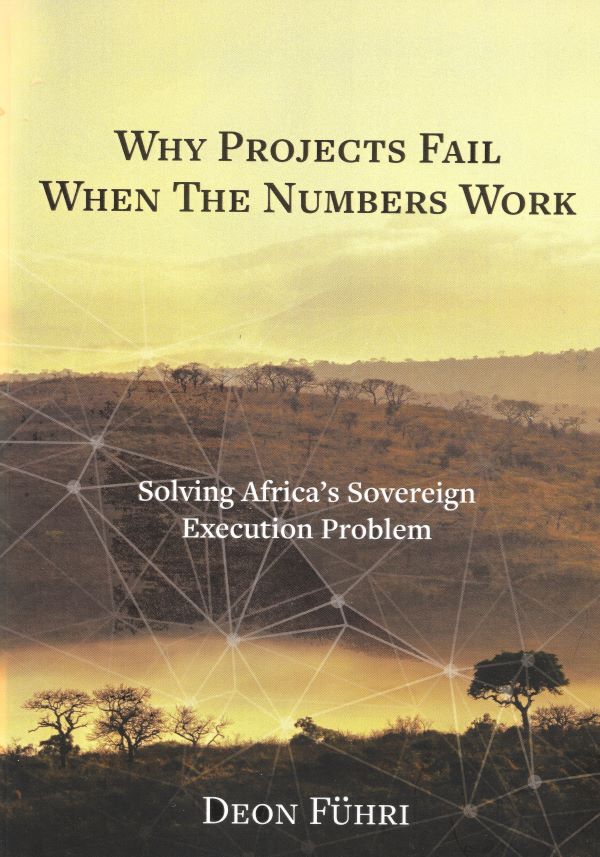
Every year, projects with strong financial models fail. Drawing on three decades of operational and advisory experience across Africa, Deon Führi examines why apparently viable projects come apart once institutional realities, misaligned incentives and execution assumptions take over, and what serious decision-makers should test before they commit.
Published. Available now in bookstores and online.
What boards, investors and leadership teams must test before committing capital, people, partners and reputation to an African opportunity.
Receive occasional updates on The Africa Decision and a sample chapter when it becomes available.
Perspectives on infrastructure, development finance and the decisions that determine outcomes across Africa.
Failure becomes visible in the market, but the decision that made it likely may have been taken months earlier – when leaders approved the premise,
Financial viability is necessary. It is not proof that the institutions, incentives and operating arrangements around a project are ready to carry it. By Deon
The largest risks are rarely visible in a market-sizing slide. They sit in the institutions, relationships and decisions that determine whether opportunity can be converted
Practical perspectives on the decisions, assumptions and operating realities that shape outcomes across Africa. One substantial note a month. No noise.
Deon speaks on infrastructure, development finance and the realities of doing business across Africa, drawing on three decades of operational and advisory experience on the continent. He is available for keynotes, panels, executive briefings and interviews, and is open to non-executive and advisory board appointments in his personal capacity.
Why sound economics are not enough, and how institutional capacity, incentives, decision rights and execution assumptions determine whether a project survives operational reality.
What boards, investors and leadership teams should test before committing capital, people, partners and reputation to an African opportunity.
How leaders can separate durable opportunity from continental averages, attractive narratives and untested assumptions, and what they should examine market by market.
Why strategies that appear coherent at headquarters can fail in-market, and how leaders can bring operating reality into the decision before commitments become difficult to reverse.
Why selecting a local partner is a governance and execution decision rather than an administrative step, and how alignment, incentives and decision rights should be tested.
What Japanese business culture and African operating experience reveal about patience, credibility, reciprocity and institutional memory.
For speaking engagements, board appointment enquiries, media and interview requests, book matters or general correspondence, use the form below.